New Science Advances publication explores immune-protein pathways underlying multimorbidity
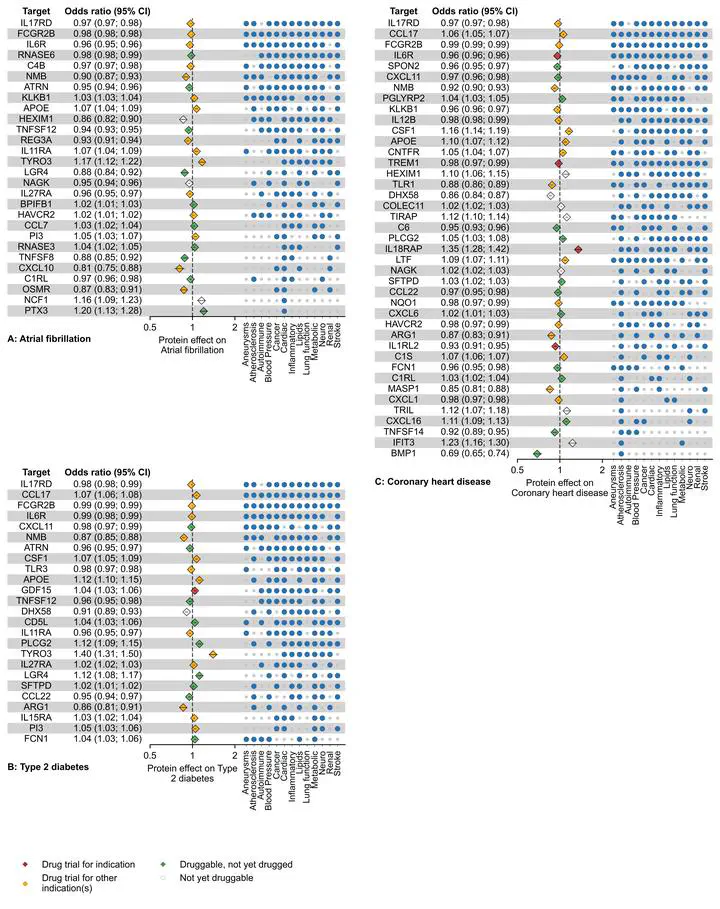
We have published a new study in Science Advances investigating how immune-related proteins may contribute to multimorbidity — the presence of multiple chronic diseases in the same individual.
We are pleased to share our new publication in Science Advances, ‘The immunoproteome and multimorbidity: a Mendelian randomisation study’.
In this study, we used large-scale human genetic and proteomic data to investigate 151 immune-related proteins across 64 diseases and biomarkers. Our findings showed that several immune proteins were linked to multiple conditions spanning cardiometabolic, inflammatory, and neurodegenerative diseases, highlighting shared biological pathways that may contribute to multimorbidity.
We identified replicated associations involving proteins including IL6R, APOE, and CD163, alongside several druggable proteins, including targets of existing therapies. These findings highlight potential opportunities for drug repurposing and indication expansion across multiple diseases.
Overall, our study provides new insight into the molecular basis of multimorbidity and demonstrates how human genetics can identify shared putative therapeutic targets across common chronic diseases.

Nikita Hukerikar
Senior Research Associate
Computational researcher with a background in software engineering, applying data-driven methods to large-scale biomedical data, with a growing focus on cardiovascular disease and multimodal data integration.

A. Floriaan Schmidt
Professor
Professor in computational cardiovascular science. My research focuses on cardiovascular genetics, drug target identification, and risk prediction and causal inference using genomics, omics, imaging, and real-world electronic health records.